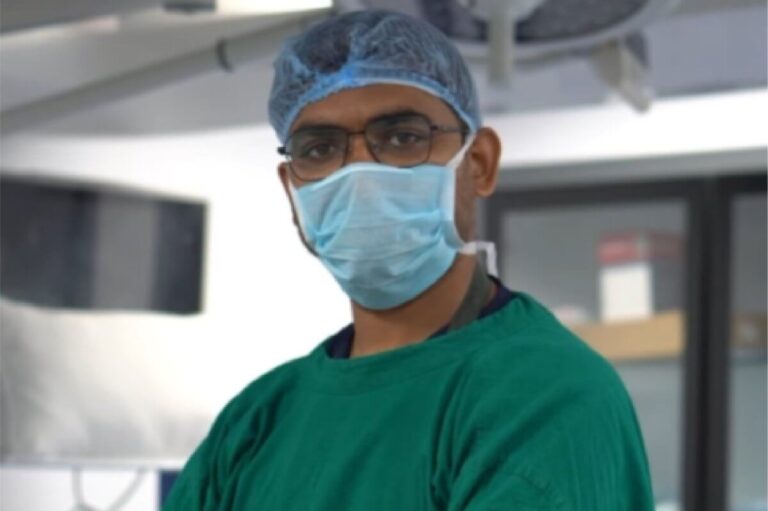
— Dr. Gopi
Psychiatrist | Sexual Health consultant
EROS Hospital, Rajkot
There is a conversation India has been avoiding for a long time. It is not the kind of avoidance that comes from not knowing the subject matters — most people, if asked, would agree that health is important. The avoidance is more specific, and more stubborn. It is the discomfort that descends when the word ‘sexual’ precedes the word ‘health.’
Sexual health influences every dimension of a person’s life: their physical well-being, their mental health, their intimate relationships, their ability to conceive, their sense of dignity and identity. And yet it remains, in most Indian households, most schools, most workplaces, and most clinics, effectively unspoken.
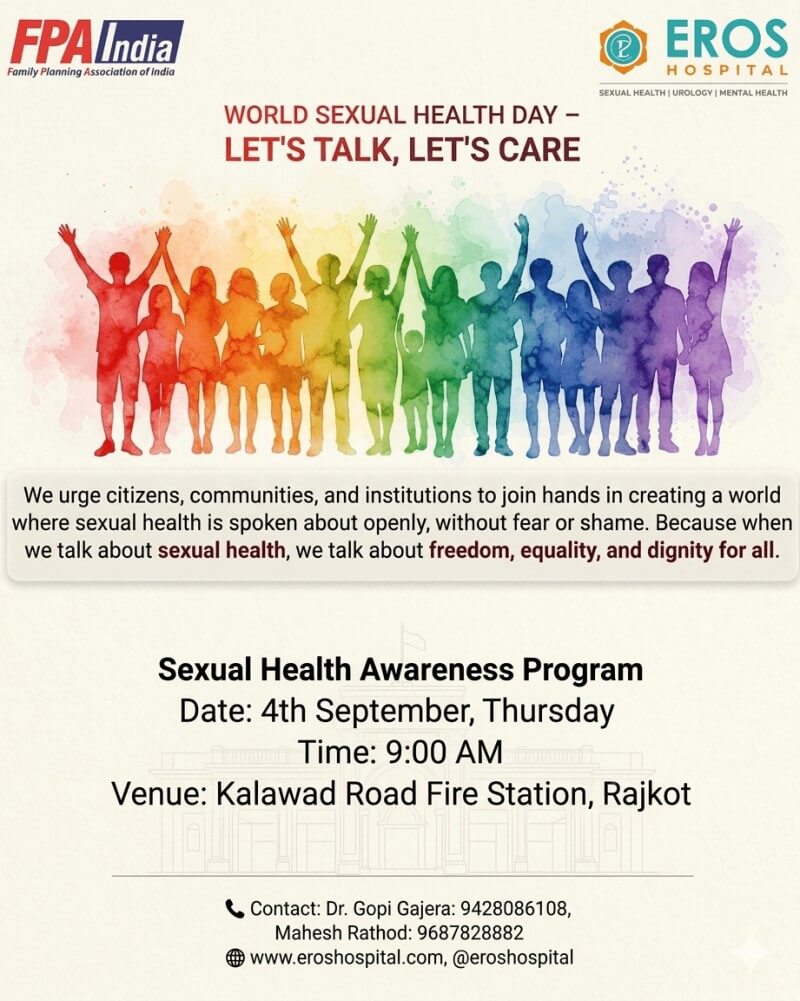
On 4 September 2024 — Sexual Health Awareness Day — Eros Hospital and the Family Planning Association of India (FPAI), Rajkot Branch, decided to push that conversation into the open. Not gently. Directly. With data, with community presence, with resources, and with the explicit intention of showing what is possible when the silence is broken.
What followed was more than an awareness campaign. It was a community movement — one that brought hidden realities to light and sparked conversations that genuinely needed to happen. This post tells the full story: what the data showed, what the campaign did, and why this model deserves to be replicated across India.
Sexual health touches every aspect of life — our relationships, intimacy, confidence, fertility, identity, and overall well-being. Yet it remains one of the most stigmatised subjects.
Why This Campaign Was Needed
India has made significant strides in healthcare access over the past two decades. But access alone does not resolve the problem of stigma. Women across the country continue to normalise pain, dismiss symptoms, and avoid clinical conversations about their bodies — not because care is unavailable, but because the culture around sexual and reproductive health has not kept pace with the infrastructure.
The gaps are not subtle. They show up in women who manage menstrual disorders for years without treatment, in reproductive health experiences that are never discussed with a doctor, in sexual health concerns that are carried silently because there is no vocabulary, and no safe space, to name them.
This campaign was designed with four specific objectives:
- Break stigma around sexual health discussions — at the community level, not just in clinical settings.
- Identify real gaps in ground-level awareness through structured data collection.
- Provide education in accessible, relatable formats that reach people where they are.
- Encourage early help-seeking by normalising the idea that sexual health concerns deserve clinical attention.
The combination of survey, direct outreach, institutional sessions, youth engagement, and community event was deliberate. Awareness alone rarely changes behaviour. This campaign aimed for something more durable: a shift in what people feel permitted to know, to ask, and to do about their own health.
What the Survey Found: Six Uncomfortable Truths
A team of nursing students from Kamdar Nursing College — guided by nursing staff Shilpaben Nimavat and Sonalben Devacharya, and coordinated by FPAI Branch Manager Mahesh Rathod — conducted structured door-to-door interviews with 50 married women in Rajkot, covering 100 homes in the Laxminagar area.
The findings are not surprising to those of us who work in sexual health. But they need to be said plainly. These numbers represent real women navigating their health without the knowledge, support, or clinical relationships they deserve.
1. Eight in ten women had no awareness of basic sexual health prevention
80% of women were unaware of HPV vaccination and self-examination techniques for breast and genital health.
Four out of five women surveyed did not know that HPV vaccination exists as a preventive measure against cervical cancer. They had not been informed about breast self-examination or genital self-examination as basic, accessible, potentially life-saving practices.
Cervical cancer is largely preventable. Breast cancer, detected early, is highly treatable. The gap between what is medically possible and what women actually know is not a gap in medicine — it is a gap created directly by the cultural reluctance to discuss sexual and reproductive health openly. This costs lives.
2. Half of women are still using cloth during menstruation
1 in 2 women surveyed still use cloth during menstruation — due to cost barriers and the shame of purchasing sanitary products.
In 2024, sanitary pads are available at pharmacies and corner shops across Rajkot. And yet half of the women in this survey are not using them. The barriers are cost — in households where every expense is managed tightly, a product categorised as non-essential may not consistently make the cut — and shame: several women reported discomfort purchasing menstrual products in public settings, particularly from male shopkeepers.
The physical consequences of cloth use include higher rates of bacterial and fungal infection, reduced mobility, and hygiene challenges. The deeper consequence is the normalisation of a biological process as something to be concealed rather than managed well. Menstrual health is reproductive health is women’s health. The stigma around it is not neutral. It has clinical costs.
3. Three in four women experience menstrual symptoms affecting daily function
75% of women reported menstrual symptoms including back pain, headaches, weakness, and mood changes.
These symptoms are common. They are also frequently dismissed — both by the women themselves and by the healthcare system — as the expected price of being female. They should not be. Severe period pain can indicate endometriosis. Significant mood disruption before menstruation can meet criteria for Premenstrual Dysphoric Disorder (PMDD). Both are treatable conditions. Neither should be silently endured.
When three in four women are experiencing monthly symptoms that affect how they work, parent, and relate, and virtually none have discussed this with a doctor, that is a systemic healthcare failure, not an individual one.
4. One in three women has vulvo-vaginal complaints she has never raised with a doctor
1 in 3 women reported persistent vulvo-vaginal symptoms — itching, rash, irritation — without seeking medical care
Itching, rashes, unusual discharge, and irritation are symptoms that present across a range of treatable conditions: bacterial vaginosis, fungal infections, contact dermatitis, or occasionally something that warrants more careful investigation. The barrier to seeking help is not primarily the absence of available care. It is the discomfort of discussing intimate symptoms in any setting.
A dedicated sexual health centre like Eros Hospital exists precisely to address this barrier — by creating a clinical environment where these conversations are not just permitted but actively normalised. When women know that a clinician will not flinch, they are far more likely to describe what they are actually experiencing.
5. One in three women has experienced unplanned pregnancy, miscarriage, or abortion — without professional support
1 in 3 women had experienced an unplanned pregnancy, miscarriage, or abortion — none had sought expert treatment or support.
Miscarriage affects approximately one in four pregnancies and often requires medical management alongside emotional processing. Unplanned pregnancy and abortion involve complex healthcare decisions with physical and psychological dimensions that do not disappear when the immediate event passes.
Not one of the women in this survey who reported such an experience had sought professional care. The reasons are predictable: shame, fear of judgment, the absence of a trusted clinical relationship, and the belief — widely held in Indian communities — that reproductive experiences of this kind are private failures rather than medical realities that deserve compassionate clinical attention.
This is among the costliest dimensions of sexual health stigma. The physical consequences of unmanaged reproductive events can be serious. The psychological consequences — grief unacknowledged, distress unaddressed, complications undetected — compound over time.
6. Over 90% of women did not know that sexual abuse extends beyond physical assault
90%+ of women were unaware that sexual abuse includes verbal and non-verbal forms, not only physical assault.
When asked about sexual abuse, the vast majority of surveyed women understood it to mean physical sexual assault. Knowledge of the broader spectrum was almost entirely absent.
Verbal abuse includes sexually suggestive or demeaning remarks, offensive jokes with sexual content, and verbal coercion.
Non-verbal abuse includes unwanted suggestive looks, intrusive staring, and sexual gestures made without consent.
Physical abuse includes any unwanted physical contact of a sexual nature, from touching to assault.
Without knowledge of what constitutes abuse, women cannot name their experiences. They cannot report, seek support, or understand that non-physical forms of sexual coercion are also unacceptable. Awareness is protective here — not in a theoretical sense, but in the practical sense that a person who can name what is happening to them is better equipped to respond to it.
What These Numbers Tell Us
These findings do not reflect unusual circumstances. They reflect the everyday reality of women living with insufficient information, no safe space to ask questions, and a cultural context that has systematically discouraged conversations about sexual and reproductive health. The silence is not protecting anyone. It is creating a gap between the health these women deserve and the health they are actually receiving.
What the Campaign Did: Five Interventions, One City
The survey was one element of a much broader day of activity. The campaign was deliberately designed to move beyond data collection into direct impact — ensuring that awareness translated into action at both the individual and community level.
🩹 Sanitary Pad Distribution & Menstrual Health Sessions
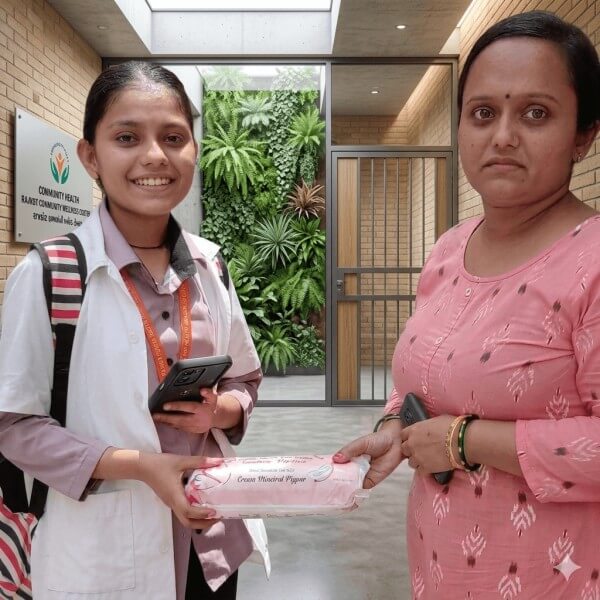
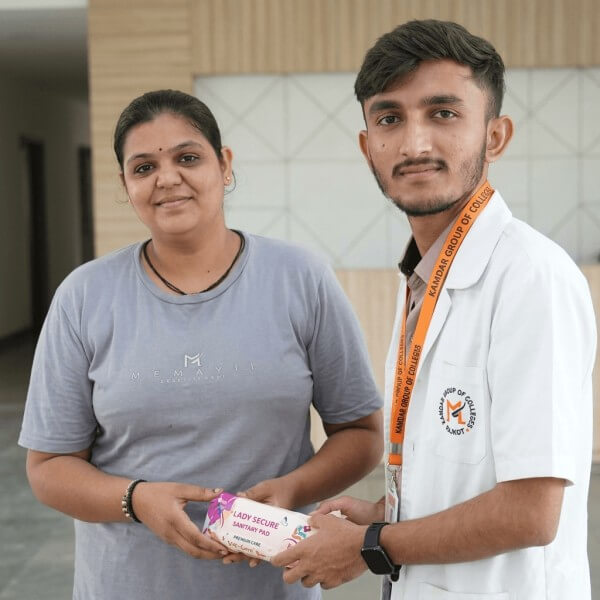
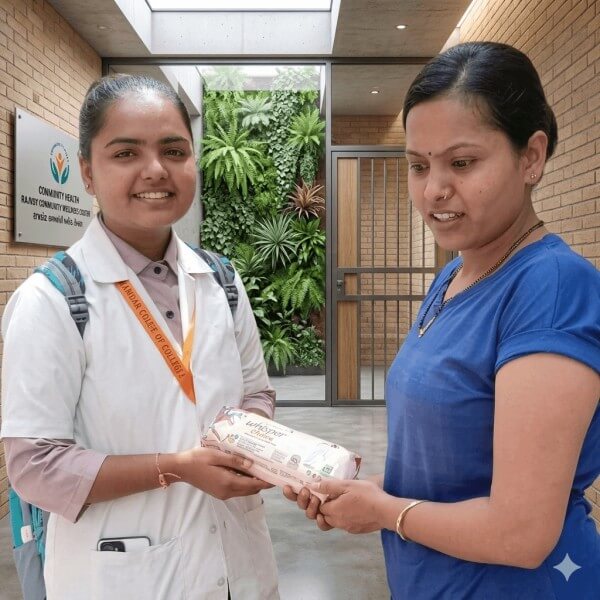
More than 100 sanitary pads were distributed directly to households in underprivileged areas, including 100 homes in Laxminagar. Distribution was accompanied by hands-on menstrual health education sessions covering hygiene practices, available options, and the reasoning behind the stigma that keeps women from better choices. The goal was not just to put a product in someone’s hand, but to shift the conversation around menstruation itself — from something to be managed quietly and shamefully to something that deserves proper care.
🏫 Sexual & Reproductive Health Awareness Sessions
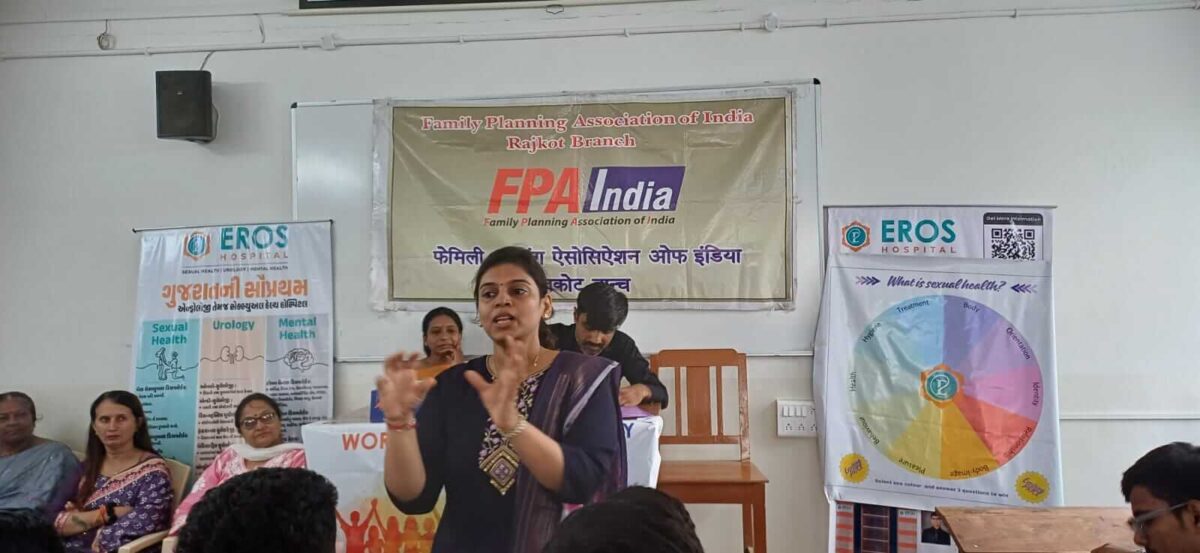
Structured SRH awareness sessions were conducted at six institutions across Rajkot and Junagadh: Rolex Factory, Kundaliya College, Atmiya University, Marwadi University, ITI Rajkot, and ITI Junagadh. The sessions brought sexual and reproductive health education to diverse audiences — industrial workers, students across multiple disciplines, and young adults in vocational training. The sessions were designed to simplify clinical topics and make them approachable and relevant to each audience.
🎨 E-Poster Competition
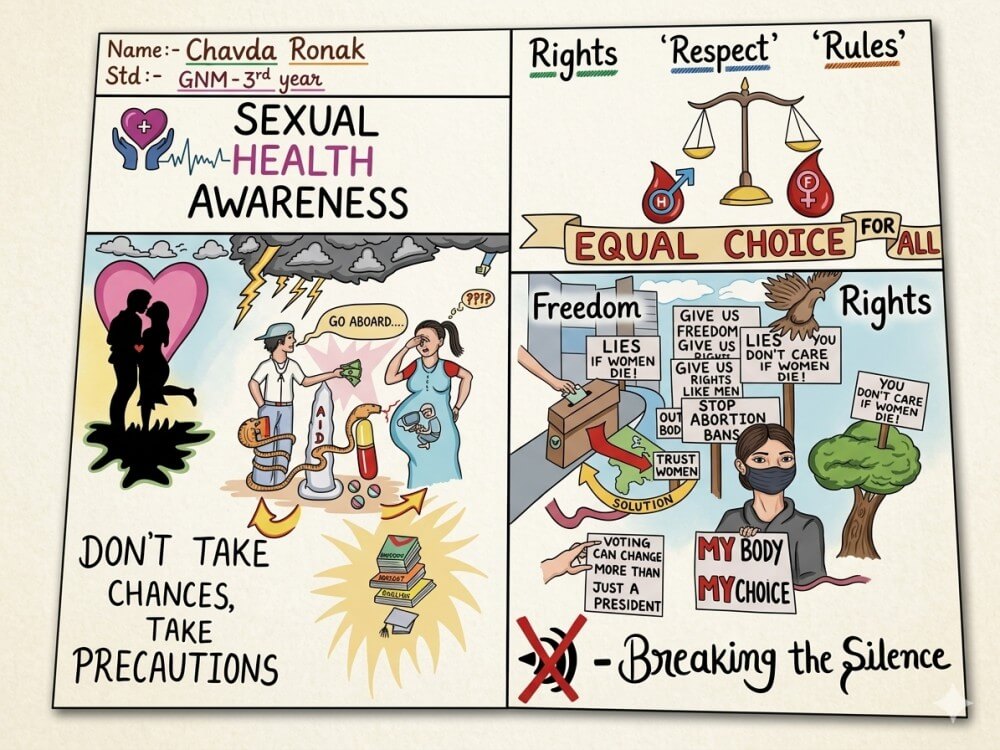
Students from medical, nursing, physiotherapy, and science-related backgrounds participated in an e-poster competition on sexual health themes. Cash prizes were awarded to winning entries. Beyond the competition itself, the initiative served a deeper purpose: when young people create content about sexual health, they engage with the subject matter actively rather than passively — and they carry that engagement into their networks. Empowering young voices to normalise the conversation is one of the most durable interventions possible.
🚒 Mass Community Awareness Event — Kalawad Road Fire Station
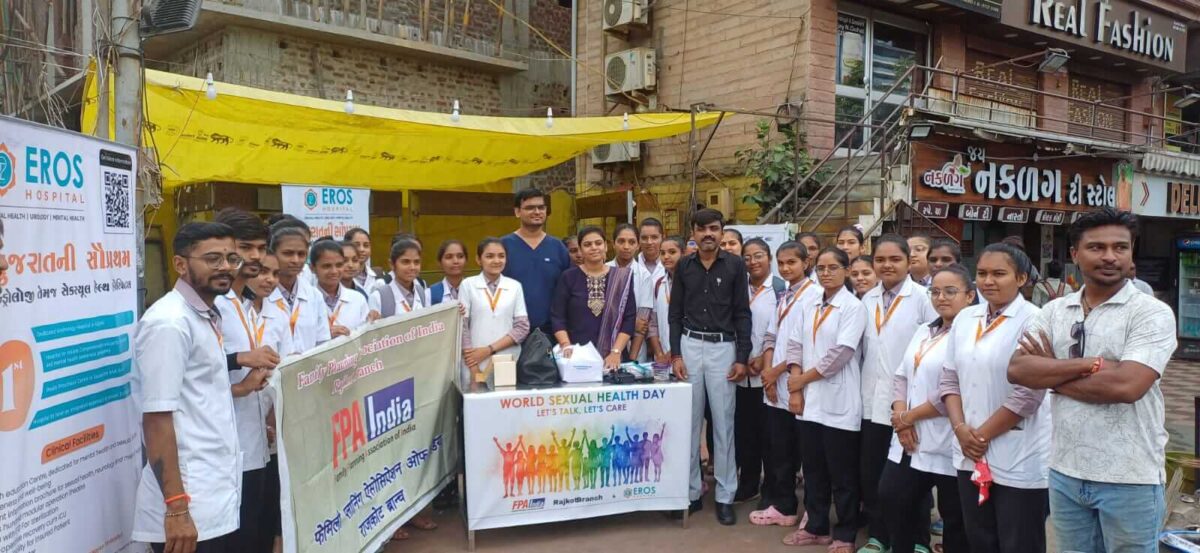
The centrepiece of the day was an interactive community programme at multiple places ,i.e. Nakalang tea stall @Kalawad Road, Dhamsaniya college @Kalawad road, Radhekishna dairy farm @ mavdi, SArvoday school @Mavdi Rajkot. FPAI Rajkot branch staff and youth volunteers ran a deliberately accessible, non-clinical event — combining games, open discussions, and interactive activities focused on sexual and reproductive health with bystanders.
The format was chosen for a reason. Sexual health education delivered as a lecture in a clinical setting reaches people who are already willing to engage. Sexual health education delivered as an interactive community event reaches the people who are not yet ready — but who, given a safe and approachable context, are willing to learn. This event demonstrated something important: when approached correctly, people are not resistant to these conversations. They are waiting for a space where those conversations feel safe.
📊 Home Survey in Laxminagar
Fifty married women were interviewed across 100 homes in Laxminagar by nursing students from Kamdar Nursing College, guided by nursing staff Shilpaben Nimavat and Sonalben Devacharya, and coordinated by FPAI Branch Manager Mahesh Rathod. The survey data reported in this article was drawn from this effort. It provided not just statistics, but a qualitative picture of how women in a specific community understand — or do not understand — their own sexual and reproductive health.
Event Details:
Date: 4 September 2024 · Time: 8:30 AM
Venue: Kalawad Road Fire Station, Rajkot
Organised by: Eros Hospital & FPAI Rajkot Branch (Dr. Gopi Gajera & Mahesh Rathod)
What Makes This Model Replicable
Events like this one are easy to describe as one-offs — a well-meaning effort by a motivated organisation on a specific occasion. But the design of this campaign points toward something more transferable: a model that works because it integrates several elements that are typically kept separate.
📊 Data + Action Survey findings were used immediately to direct resource allocation and tailor session content. The gap between identifying a problem and addressing it was measured in hours, not months.
🏘️ Community + Institutions Grassroots door-to-door outreach alongside sessions at factories, colleges, and universities — reaching both those who would and those who would not ordinarily seek health information.
👩 Women + Youth Engagement The campaign targeted both current generations — through the home survey and pad distribution — and future ones, through the student competition and university sessions.
🏥 Expertise + Accessibility Clinical knowledge delivered in non-clinical formats. The goal was not to create patients but to create informed people who know when and how to seek care.
The combination is what gives this kind of campaign lasting impact. Data without action raises awareness and leaves it there. Action without data is undirected. Institutional sessions reach only those who are already in institutions. Community events reach the people who are not.
This is not just about one day in Rajkot. It is about what a scalable model for sexual health awareness in India could look like.
The Bigger Picture: Why India Needs This Conversation at Scale
The findings from Rajkot are not exceptional. They reflect a national pattern. Women across India continue to normalise menstrual pain, manage reproductive health events without clinical support, carry sexual health concerns without vocabulary to name them, and navigate experiences of abuse without awareness that what is happening to them is, in fact, abuse.
The consequences of sustained sexual health silence are not abstract. They show up in:
- Preventable cancers that are not prevented because vaccination and screening are not accessed
- Treatable conditions that are not treated because they are never disclosed
- Reproductive trauma that is not processed because there is no clinical or social space for it
- Intimate relationships that are strained by unaddressed sexual health concerns
- Mental health that deteriorates under the weight of stigma and unspoken difficulty
Changing this requires more than information. It requires creating environments — in clinics, in schools, in workplaces, in communities — where sexual health is approached as what it is: a fundamental aspect of human health that deserves the same quality of attention, conversation, and care as any other medical concern.
When we talk about sexual health, we talk about freedom, equality, and dignity for all.
What We Are Asking For:
If you are reading this — as a citizen, a parent, a teacher, an employer, or a healthcare provider — here is a specific ask for each of you.
- If you are a woman who recognised herself in any of the survey findings: you do not have to manage these things alone. Menstrual symptoms can be treated. Vulvo-vaginal concerns can be assessed. Past reproductive experiences can still be addressed, even now. You deserve clinical care, without judgment.
- If you are a parent start the conversations your parents probably did not have with you. Age-appropriate sexual health education at home is protective. Children who understand their bodies and their right to boundaries are better equipped to seek help when they need it.
- If you are a teacher or employer create space for these conversations in your institution. Invite healthcare professionals to speak to your students or employees. Normalise the idea that sexual health is a legitimate topic for education and workplace wellness programmes.
- If you are a healthcare provider ask the questions your patients are waiting to be asked. The survey showed consistently that women were not raising sexual health concerns on their own initiative. The clinical encounter is often the only opportunity these conversations have.
- If you are an institution or community leader partner with organisations working in this space. The model demonstrated in Rajkot is replicable. A single day of well-designed community activity reaches more people, in more practical ways, than months of passive awareness messaging.
Frequently Asked Questions
What is Sexual Health Awareness Day?
Who organised the campaign and what did it involve?
What did the home survey find about women’s sexual health awareness?
What is HPV vaccination and why is it important for women in India?
What are the different forms of sexual abuse that people should be aware of?
What is FPAI and what role does it play in India’s sexual health landscape?
How can Rajkot residents access sexual health care at Eros Hospital?
How can organisations replicate this kind of sexual health awareness campaign?
A Final Thought
Fifty doors in Laxminagar. Six institutions across Rajkot and Junagadh. One community event at a fire station. These are not large numbers in the context of a city, let alone a country.
But change at scale begins with demonstrations that change is possible. The women who answered the survey, the students who created the posters, the community members who showed up to the event and stayed to talk — all of them are now slightly more likely to raise a health concern, to seek a vaccination, to recognise an experience they previously had no name for.
That is how the culture around sexual health shifts. Not in a single campaign. Over many conversations, in many settings, by many people — each one making it slightly more normal to say what previously felt unsayable.
We urge citizens, communities, and institutions to join hands in building a world where sexual health is spoken about openly — without fear, without shame, and without silence.
Because when we talk about sexual health, we talk about dignity, equality, and freedom for all.
Talk to Us. We’re Listening.
All consultations are completely confidential. Book a Consultation
Women’s Health · Menstrual Health · Reproductive Health · Sexual Dysfunction · Couples Counselling · Psychosexual Therapy · Surgical Solutions
This post is based on survey data collected on 4 September 2024 by Kamdar Nursing College students under FPAI Rajkot supervision, in association with Eros Hospital.