Patient details in this account have been anonymized and adapted to protect privacy. It is shared for patient education and reflects a category of cases seen regularly in practice.
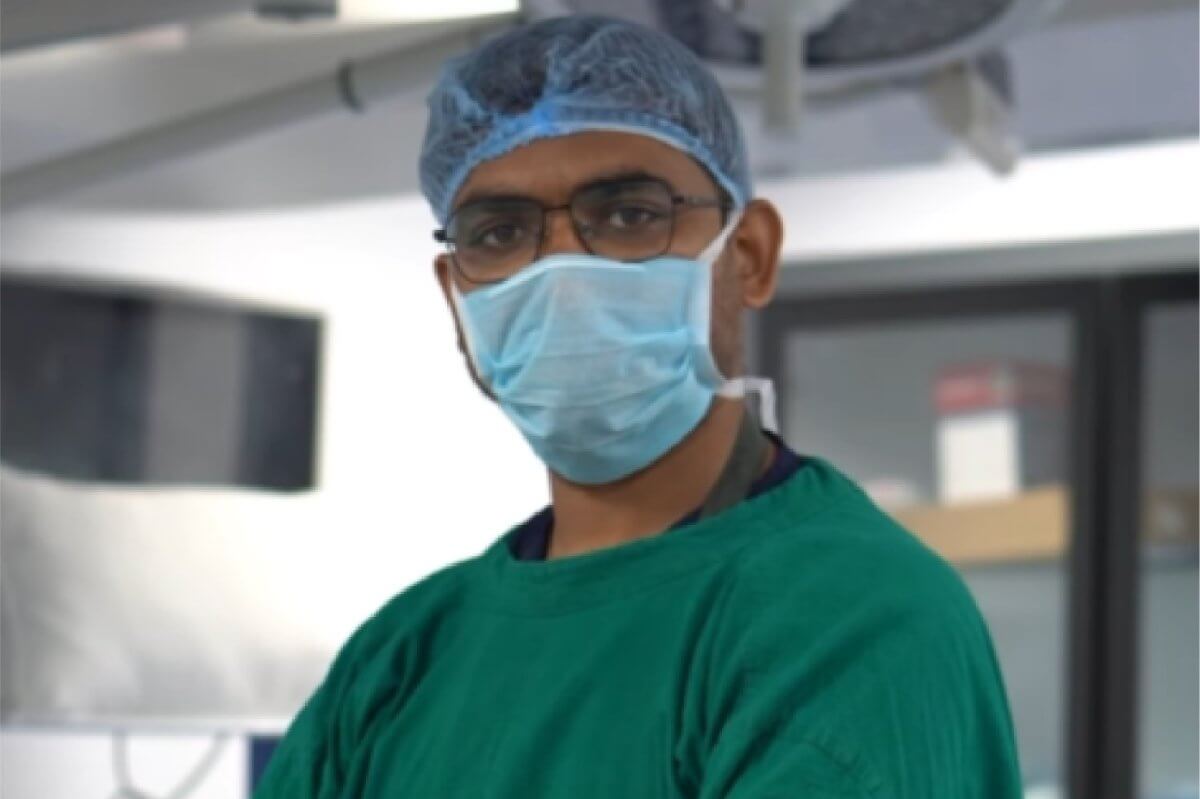
I’m Dr. Nayan Timbadiya, a Prosthetic Urologist and Andrologist, and in over a decade of practice, certain cases stay with me. Not because they were surgically complex, but because of what they meant to the person sitting across from me. This is one of them.
A Case I Think About Often
A man in his early thirties came to see me at EROS Hospital after six years of living with erectile dysfunction. He had been married for two years, and the marriage remained unconsummated. By the time he reached my consultation room, he had already tried oral medications, lifestyle changes, and several other conservative measures, none with any meaningful, lasting response.
What struck me wasn’t the clinical history. It was the silence he carried. Men in this situation often wait years before speaking to anyone, let alone a doctor. In a culture where these conversations are rarely normalized, six years of trying to solve this quietly, on his own, is more common than most people realize.
Why Patients Find Us
He told me he’d searched online, late at night, simply looking for a clinic in Gujarat that dealt with this seriously and confidentially. That’s one of the reasons we run regular implant awareness workshops at EROS Hospital: open sessions where men can learn about ED treatment options, including surgery, without first having to work up the courage for a one-on-one consultation. For many patients, the workshop is the first step. The consultation comes after.
The Evaluation
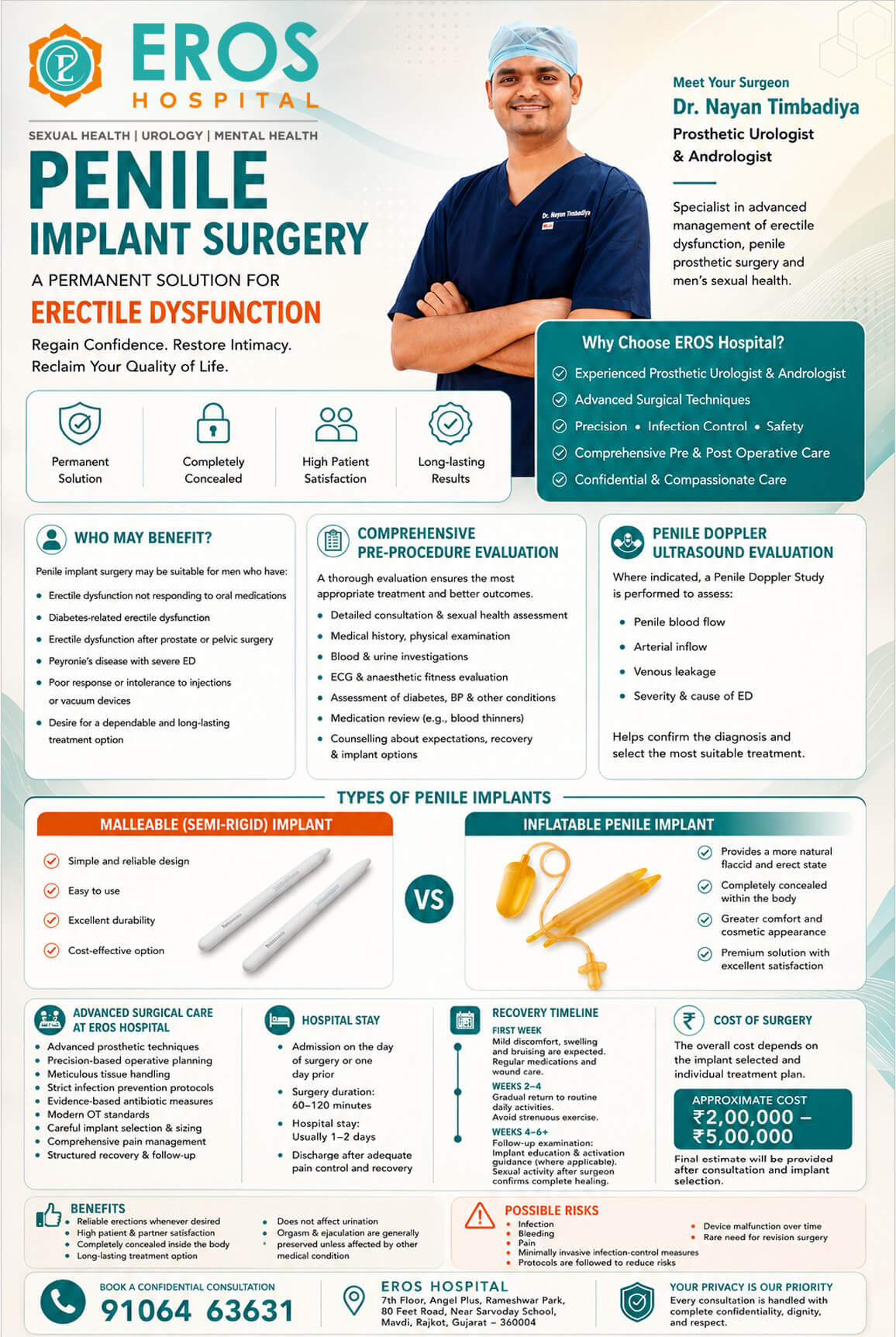
When he came in, my first priority wasn’t to talk about surgery. It was to understand why conservative treatment hadn’t worked. We took a detailed medical and sexual health history, ran standard blood investigations, and performed a penile Doppler ultrasound to assess arterial inflow and rule out venous leak. This step matters more than patients often expect. It tells us whether we’re dealing with a vascular cause, a psychological component, or both, and it directly shapes what we recommend next.
In his case, the findings supported what his treatment history already suggested: he was a reasonable candidate for penile implant surgery, having exhausted the conservative options available to him.
Discussing Options, Not Prescribing Them
I always walk patients through both malleable and inflatable implants: how each functions, the differences in look, feel, and cost, and what long-term satisfaction data looks like for each. I don’t push patients toward one option. My role is to make sure they understand the trade-offs well enough to choose confidently.
He chose the option that fit his lifestyle and expectations, and we scheduled his surgery.
Surgery and Recovery, From My Side of the Table
The procedure took a little under two hours, and he was discharged within a day, which is typical. The first week involved expected swelling and discomfort, managed with standard pain control and wound care. By the four-week mark, he was back to his normal routine. At six weeks, on follow-up, healing was complete and we cleared him to resume sexual activity.
What I try to communicate to every patient, and what I told him, is that recovery is rarely just physical. There’s often a period of re-learning confidence after years of avoidance. That part doesn’t show up on a follow-up chart, but it’s just as real.
Where Things Stand Now
I saw him again recently for a routine follow-up. His wife is now expecting their first child, conceived naturally. It’s worth being clear here as a clinician: penile implant surgery restores erectile rigidity, it does not by itself alter fertility. For this patient, once intimacy was possible again, conception followed naturally, but this outcome varies by individual, and any fertility concerns should be evaluated separately with your treating doctor.
I share this case not because every patient’s story ends this way, but because it reflects something I see often: men who wait years longer than they need to, simply because this remains such a difficult topic to raise.
A Note to Anyone Reading This
If any part of this feels familiar, I’d encourage you not to wait. Erectile dysfunction, even long-standing, treatment-resistant ED, has evidence-based solutions. At EROS Hospital, we offer confidential consultations and regular patient education workshops for men exploring these options.