Treatments & Diagnosis
Peyronie’s Disease / Penile Curvature
Diagnosis and treatment for Peyronie's disease and penile curvature, from non-surgical options to plication, graft, and implant surgery.
Treatments & Diagnosis for Peyronie's Disease / Penile Curvature
Peyronie's disease happens when scar-like tissue, called plaque, forms inside the penis and pulls it out of its usual straight shape. It's part of how the body responds to an injury, even a minor one the patient may not remember, and the curvature is usually most noticeable during an erection rather than when flaccid.
It's worth telling apart from congenital penile curvature, which a man is born with and typically becomes noticeable around puberty or early adulthood. Peyronie's disease, by contrast, is acquired later in life as plaque builds up following injury.
The condition was first documented by French surgeon François de la Peyronie in the 18th century, and it's been studied and treated for centuries since.
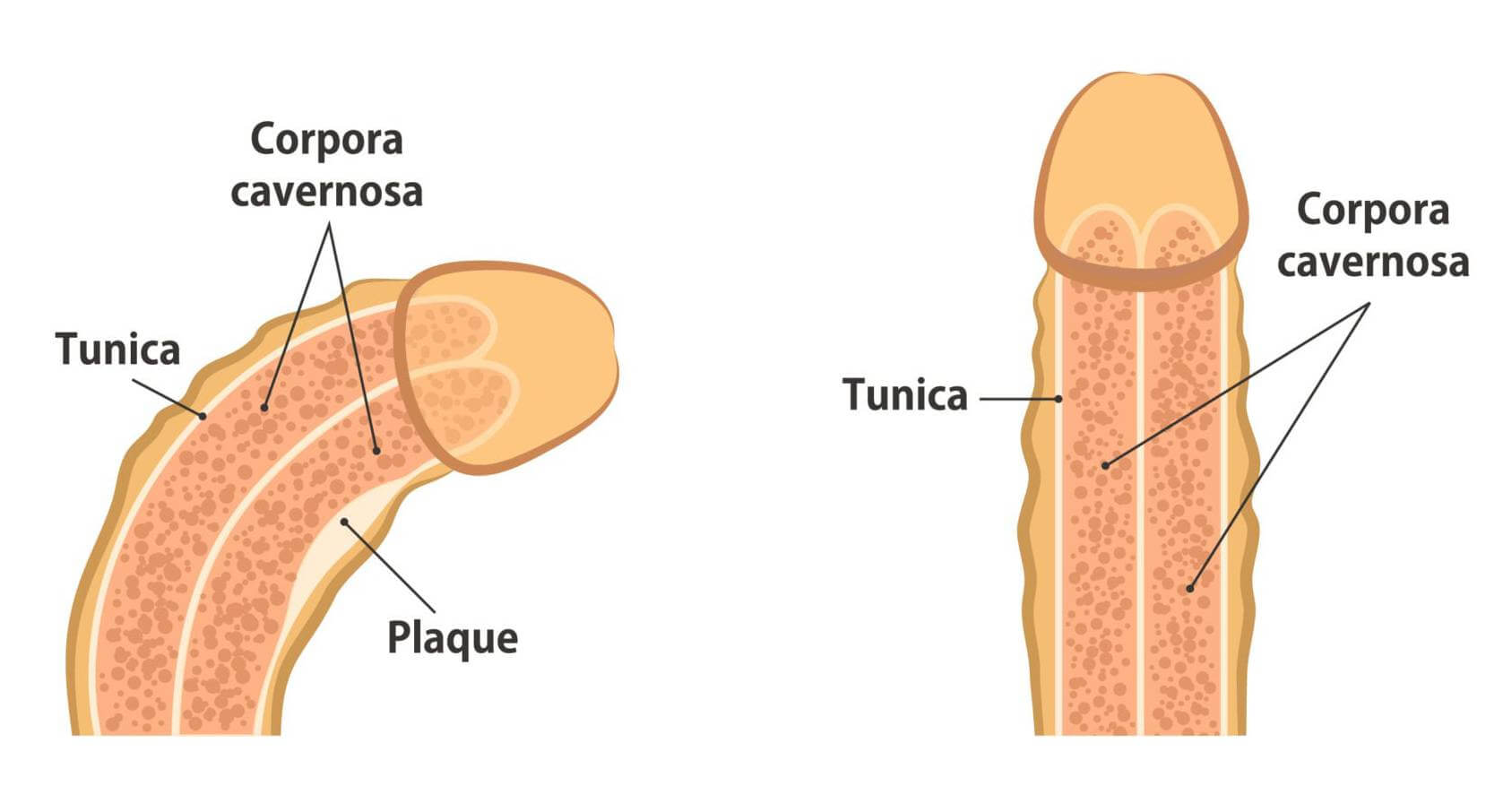
Important: Peyronie's disease is not contagious and has no connection to any sexually transmitted infection.
The condition typically moves through two phases. In the acute phase, which can last up to about 18 months, the curvature is still developing and erections may be painful. Once it settles into the chronic phase, the shape of the plaque stabilizes and pain generally subsides, though the curvature itself may remain.
Signs of Peyronie's Disease
- A noticeable curve or bend in the penis, usually during erection
- Hard lumps or bands of plaque felt on one or more sides of the penis
- Pain during erections, especially in the earlier acute phase
- Softer erections or difficulty maintaining one
- Pain or discomfort during intercourse caused by the curvature
- Shortening of the penis compared to before the condition developed
Some factors are more common in men who develop Peyronie's disease, including:
- Diabetes
- High blood pressure
- High cholesterol or other lipid disorders
- Smoking and heavy alcohol use
- Existing erectile dysfunction
- Narrowed arteries supplying the heart
- Dupuytren's contracture (a condition causing bent fingers)
Treatment Options
Treatment depends on how far the condition has progressed and how much it's affecting sexual function, and it's usually approached in the order below before surgery is considered.
Non-surgical options include oral medications, penile traction devices worn over time to gradually reduce curvature, and injections delivered directly into the plaque to break it down.
Surgery is generally reserved for cases where curvature is severe or non-surgical treatment hasn't worked. There are three main surgical approaches:
- Plication surgery: Shortens the side of the penis opposite the plaque to straighten it out.
- Graft surgery: Lengthens the side where the plaque has formed, often used for more significant curvature.
- Penile implant: A prosthetic device that both straightens the penis and can address erectile dysfunction, if present, at the same time.