Treatments & Diagnosis
Low Testosterone (Hypogonadism)
Understand the causes, symptoms, and treatment options for low testosterone (hypogonadism) from diagnosis to therapy tailored to your needs.
Treatments & Diagnosis for Low Testosterone (Hypogonadism)
Male hypogonadism happens when the testicles don't produce enough testosterone, which can show up as reduced sex drive, muscle loss, and fatigue, among other symptoms. Testosterone plays a role well beyond sexual health, influencing puberty, fertility, muscle mass, bone strength, and mood.
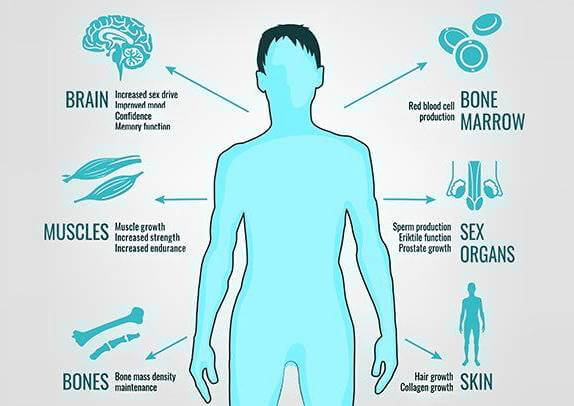
What Does Testosterone Do?
| Brain | Influences mood, sex drive, and cognitive function |
| Skin | Affects facial and body hair, balding, and oil production |
| Larynx | Deepens the voice and forms the Adam's apple |
| Kidney | Stimulates erythropoietin production, which drives red blood cell formation |
| Male Sexual Organs | Affects penile and prostate growth, and sperm production |
| Muscle | Supports strength and muscle mass |
| Liver | Regulates protein production |
| Fat | Helps regulate fat mass |
| Bone Marrow | Stimulates stem cell production |
| Bone | Supports bone growth, strength, and density |
Types of Hypogonadism:
There are two main types: primary hypogonadism, caused by a problem in the testicles themselves, and secondary hypogonadism, caused by a problem in the hypothalamus or pituitary gland, the parts of the brain that signal the testicles to produce testosterone. Either type can develop at any age; what changes with age of onset is mainly how the symptoms present, before puberty it can delay development, while after puberty it tends to show up as the symptoms below. Age-related testosterone decline in older men is a related but distinct pattern, often discussed separately as late-onset hypogonadism.
Symptoms:
Symptoms vary depending on the age of onset. Common symptoms in adult men include:
- Fatigue
- Hot flashes
- Low sex drive
- Erectile dysfunction
- Mood changes
- Difficulty concentrating
- Sleep disturbances
- Loss of muscle mass
- Reduced bone density
- Enlarged breasts
- Hair loss
- Infertility
Diagnosis:
Diagnosing hypogonadism generally involves:
- A history of persistent symptoms, not just an occasional off day
- Blood tests confirming low testosterone levels
- A clinical examination, including testicular size
Types of Testosterone Replacement Therapy
| Type | Formulation | Side Effects |
|---|---|---|
| Oral | Short-acting testosterone undecanoate pills, sublingual tablets | Generally well tolerated, with minimal side effects when used for a short duration |
| Injection | Short-acting: testosterone cypionate and enanthate (every 2-3 weeks); Long-acting: testosterone undecanoate (roughly every 3 months) | Testosterone levels can fluctuate between doses, which may cause symptoms to vary through the treatment cycle |
| Topical | Short-acting: transdermal testosterone patch/gel; Long-acting: subdermal depot patch | Skin irritation, accidental transfer to others through skin contact, and a small infection risk with long-acting implants |
Important Reminders
- Testosterone replacement therapy is a prescription treatment for a diagnosed medical condition, not something to use for bodybuilding or performance
- It can affect fertility, so it's usually avoided if you're actively trying to conceive
- Regular check-ups and blood tests during therapy are important to monitor levels and catch side effects early
- Diet, exercise, sleep, and weight all influence natural testosterone levels and are worth addressing alongside any treatment
- Over-the-counter "testosterone boosting" supplements aren't backed by solid evidence; a proper diagnosis and prescribed treatment are a more reliable path